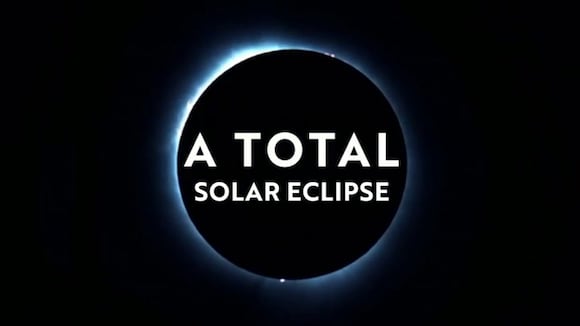
The August 12, 2026 solar eclipse will be visible as a partial eclipse across parts of the United States and most of Canada, with the best views in Alaska, northern New England and eastern Canada. The eclipse will begin in Alaska during the morning, reach the northern and northeastern U.S. around midday and continue into the afternoon farther east in Canada.
The event is a total solar eclipse globally, but the United States and Canada are outside the narrow path of totality. That means viewers in North America will see the Moon cover only part of the Sun rather than completely block it.
For anyone planning to watch, the key times vary considerably by location. New York City reaches maximum eclipse at 1:54 p.m. EDT, Boston at 1:55 p.m., Bangor, Maine, at 1:53 p.m., and Fairbanks, Alaska, at 8:27 a.m. local time.
Quick answer: What time is the solar eclipse in the U.S. and Canada?
The partial solar eclipse begins in the United States as early as 7:34 a.m. AKDT in Alaska and ends as late as 2:52 p.m. EDT in Maine. In Canada, the event stretches from the morning in western regions into the afternoon in eastern provinces.
Some of the most important times are:
- Fairbanks, Alaska: maximum at 8:27 a.m.
- Anchorage, Alaska: maximum at 8:21 a.m.
- Bangor, Maine: maximum at 1:53 p.m.
- Boston: maximum at 1:55 p.m.
- New York City: maximum at 1:54 p.m.
- Philadelphia: maximum at 1:53 p.m.
- Washington, D.C.: maximum at 1:53 p.m.
- Iqaluit, Nunavut: maximum at 1:24 p.m.
- St. John’s, Newfoundland and Labrador: maximum at 3:34 p.m.
All times are local to each location.

Peak times for the August 12, 2026 partial solar eclipse vary across the United States and Canada, from the morning in Alaska to the afternoon in the Northeast and Atlantic Canada. PHOTO BY NOÉ YACTAYO
What time does the solar eclipse start in the U.S.?
The eclipse will move across the United States from west to east. Alaska gets the event in the morning, while the partial eclipse reaches the contiguous U.S. around midday.
According to Timeanddate, the partial eclipse begins at 7:34 a.m. AKDT in Alaska, while the first affected locations in the contiguous U.S. include Montana and North Dakota at about 10:27 a.m. MDT. The event then moves toward the Midwest and Northeast before ending in Maine at 2:52 p.m. EDT.
Key U.S. cities to watch
| City | Begins | Maximum | Ends | Sun Covered |
|---|---|---|---|---|
| Fairbanks, Alaska | 7:37 a.m. | 8:27 a.m. | 9:18 a.m. | 37% |
| Anchorage, Alaska | 7:36 a.m. | 8:21 a.m. | 9:09 a.m. | 28% |
| Bangor, Maine | 12:54 p.m. | 1:53 p.m. | 2:49 p.m. | 24% |
| Portland, Maine | 12:57 p.m. | 1:53 p.m. | 2:27 p.m. | 19% |
| Boston, Massachusetts | 1:01 p.m. | 1:55 p.m. | 2:46 p.m. | 16% |
| New York City | 1:07 p.m. | 1:54 p.m. | 2:38 p.m. | 9% |
| Philadelphia, Pennsylvania | 1:11 p.m. | 1:53 p.m. | 2:35 p.m. | 7% |
| Washington, D.C. | 1:17 p.m. | 1:53 p.m. | 2:27 p.m. | 4% |
| Detroit, Michigan | 1:03 p.m. | 1:36 p.m. | 2:08 p.m. | 3% |
NASA’s calculations show a clear pattern: the farther northeast you are, the larger the portion of the Sun covered by the Moon. Fairbanks will see about 37% coverage, compared with about 9% in New York City and 4% in Washington, D.C.
What time is the solar eclipse in New York?
New York City will see a partial solar eclipse from 1:07 p.m. to 2:38 p.m. EDT on August 12.
The maximum will occur at 1:54 p.m., when approximately 9% of the Sun will be covered by the Moon. New York is outside the path of totality, so there will be no moment when the Sun is completely obscured.
That makes 1:54 p.m. the key time for New Yorkers who want to see the deepest point of the eclipse.
What time is the solar eclipse in Maine and New England?
The Northeast will see some of the deepest partial phases in the contiguous United States.
Bangor, Maine, reaches maximum eclipse at 1:53 p.m., with about 24% of the Sun covered. Portland reaches its maximum at the same time, with about 19% coverage, while Boston reaches its peak at 1:55 p.m., with 16% of the Sun obscured.
Northern Maine will be particularly favorable for viewers who want to see the strongest partial eclipse available in the contiguous U.S.
Where will the solar eclipse be visible in the United States?
The partial eclipse will be visible across Alaska and portions of the northern and eastern United States. Timeanddate lists 27 states and the District of Columbia among the areas where at least part of the eclipse will be visible.
They include:
- Alaska
- Connecticut
- Delaware
- Illinois
- Indiana
- Iowa
- Kentucky
- Maine
- Maryland
- Massachusetts
- Michigan
- Minnesota
- Montana
- New Hampshire
- New Jersey
- New York
- North Carolina
- North Dakota
- Ohio
- Pennsylvania
- Rhode Island
- South Dakota
- Vermont
- Virginia
- West Virginia
- Wisconsin
- Washington, D.C.
The amount of the Sun covered will vary dramatically from state to state. In some locations the eclipse will be barely noticeable, while northern Maine and Alaska will see a much larger portion of the solar disk covered.

The August 12, 2026 solar eclipse will be visible as a partial eclipse across parts of the United States and Canada, with the greatest solar coverage occurring in Alaska, northern New England and eastern Canada. PHOTO BY NOÉ YACTAYO
What time is the solar eclipse in Canada?
Canada will get a broader and deeper partial eclipse than most of the United States, particularly in the north and east.
The eclipse begins in western and northern Canada during the morning and continues into the afternoon as it moves toward the Atlantic provinces and Newfoundland and Labrador. NASA notes that eastern Canada will experience the eclipse in the afternoon.
Among the standout locations are Iqaluit in Nunavut, where 61% of the Sun will be covered, and St. John’s, Newfoundland and Labrador, where coverage will reach about 53%.
Key Canadian locations
| Location | Maximum | Peak time | Sun covered |
|---|---|---|---|
| Iqaluit, Nunavut | 1:24 p.m. EDT | 1:24 p.m. | 61% |
| St. John’s, Newfoundland | 3:34 p.m. NDT | 3:34 p.m. | 53% |
| Halifax, Nova Scotia | 3:00 p.m. ADT | 3:00 p.m. | 31% |
| Québec City, Quebec | 1:46 p.m. EDT | 1:46 p.m. | 24% |
| Montréal, Quebec | 1:45 p.m. EDT | 1:45 p.m. | 18% |
| Ottawa, Ontario | 1:42 p.m. EDT | 1:42 p.m. | 15% |
The farther north and east observers are, generally speaking, the more substantial the eclipse will appear.
Will the solar eclipse be total in the U.S. or Canada?
No. This distinction is essential. The August 12, 2026 event is a total solar eclipse, but totality will occur only along a narrow path that crosses northern Russia, Greenland, Iceland, the North Atlantic, northern Spain and a small part of Portugal.
The United States and Canada are outside that path.
Instead, the Moon’s outer shadow will pass over North America, creating a partial eclipse. In other words, viewers will see the Moon take a “bite” out of the Sun, but the solar disk will never disappear completely.
Why is the eclipse deeper in northeastern North America?
The difference comes down to the position of the Moon’s shadow.
The closer an observer is to the path of totality, the greater the portion of the Sun that will be covered. North America sits outside the path of totality, but the northern and eastern portions of the continent are closer to it than locations farther south and west.
That’s why the eclipse becomes progressively more impressive as you move toward Alaska, northern New England, Nunavut and Atlantic Canada. NASA’s eclipse map shows the changing percentage of solar coverage across the region.
How to watch the August 12 solar eclipse safely
Because the eclipse will be partial throughout the United States and Canada, it is never safe to look directly at the Sun without proper eye protection.
NASA recommends using certified solar viewing glasses or a safe handheld solar viewer. Regular sunglasses, regardless of how dark they are, do not provide adequate protection. NASA says safe solar viewers should comply with the ISO 12312-2 international standard.
There is another important rule for anyone photographing the eclipse: never look at the Sun through a camera, telescope or binoculars while wearing eclipse glasses. Those devices concentrate sunlight and can cause serious eye injury unless they have a proper solar filter mounted over the front of the optics.
An indirect method, such as a pinhole projector, is another safe way to observe the partial eclipse.
Where can I watch the solar eclipse online?
If clouds interfere with your view—or if you simply want to see the total phase that won’t be visible from North America—NASA will provide live coverage.
NASA’s livestream begins at 1:15 p.m. EDT on August 12, with coverage of the eclipse from locations along the path of totality.
This is particularly useful for viewers in the U.S. and Canada because the livestream will allow them to see the dramatic total phase even though the Moon will cover only part of the Sun from their locations.
What about the Perseid meteor shower?
The August 12 eclipse is not the only celestial event attracting attention that week.
The Perseid meteor shower reaches its annual peak around August 12–13, giving skywatchers another opportunity to observe the night sky after the eclipse. The best viewing conditions will come after dark and away from artificial light.
Unlike the solar eclipse, the Perseids can be observed with the naked eye, so no telescope or binoculars are necessary.
Solar eclipse August 12, 2026: U.S. and Canada at a glance
| United States | Canada | |
|---|---|---|
| Type | Partial | Partial |
| Date | Aug. 12, 2026 | Aug. 12, 2026 |
| Earliest start | 7:34 a.m. AKDT | Morning in western Canada |
| Deepest notable coverage | 37% in Fairbanks | 61% in Iqaluit |
| New York maximum | 1:54 p.m. EDT | — |
| Latest end | 2:52 p.m. EDT in Maine | Afternoon/evening in eastern Canada |
| Totality visible? | No | No |
NASA confirms that the event will be partial across the affected areas of North America, while the total eclipse will occur along the much narrower path elsewhere in the Northern Hemisphere.
FAQ: Solar Eclipse on August 12, 2026
What time does the solar eclipse start in the U.S.?
The partial eclipse begins as early as 7:34 a.m. AKDT in Alaska and reaches the contiguous U.S. around midmorning in Montana and North Dakota. In the Northeast, it begins around midday.
What time is the solar eclipse in New York?
The eclipse begins at 1:07 p.m. EDT, reaches maximum at 1:54 p.m. and ends at 2:38 p.m. in New York City. About 9% of the Sun will be covered at maximum.
Where is the best place to see the eclipse in the U.S.?
Fairbanks, Alaska, will see about 37% of the Sun covered, while northern Maine will offer the deepest partial eclipse in the contiguous United States, with Bangor reaching about 24% coverage.
Where is the best place to see the eclipse in Canada?
Iqaluit, Nunavut, stands out, with about 61% of the Sun covered at maximum. St. John’s, Newfoundland and Labrador, will also see a deep partial eclipse of about 53%.
Will the U.S. see a total solar eclipse on August 12?
No. The August 12 eclipse will be partial in the United States and Canada. Totality will be visible along a narrow path crossing northern Russia, Greenland, Iceland, northern Spain and a small part of Portugal.
Can I watch the eclipse with regular sunglasses?
No. Regular sunglasses are not safe for direct solar viewing. Use eclipse glasses or a solar viewer that meets the appropriate safety standard.
What is the most important time to remember?
For the contiguous U.S. Northeast, the key window is around 1:50–1:55 p.m. EDT. New York reaches maximum at 1:54 p.m., Boston at 1:55 p.m. and Bangor at 1:53 p.m.